
5 Common Fire Door Defects in NSW Buildings and What to Do Next

A stairwell door stops latching after new flooring is installed. An apartment entrance door has a replacement lock, but nobody can confirm whether the hardware is approved for the doorset. A cleaner regularly wedges open a fire door because moving equipment through it is difficult.
Each situation calls for a different response. Some problems can be resolved through appropriate adjustment or repair. Others require checking the original doorset specifications before any work begins.
For strata managers, facility managers and commercial building owners in Sydney, recognising these issues early can prevent unresolved fire door defects from carrying over into the next inspection.
Fire doors form part of a building's passive fire protection. Their performance depends on the approved assembly, including the leaf, frame, hinges, closing and latching hardware, and any required seals.
The following five problems are worth checking during routine building walk-throughs.
1. Fire doors that close but don't latch
A door swings back into its frame, appears to close and stays in place. However, the latch hasn't engaged.
From a few metres away, the problem may be difficult to notice. Someone has to push the door again before it catches.
Possible causes include a poorly adjusted closer, worn hinges, a misaligned strike plate or movement in the frame. Air pressure differences can also affect the closing action.
A self-closing, self-latching fire doorset needs to complete its closing and latching cycle without someone having to pull or push it shut.
If a door repeatedly fails to latch, arrange an assessment of the complete closing mechanism. Simply increasing the closer force can introduce other problems, including making the door unnecessarily difficult to open.
Record the door's location and describe the behaviour. For example, "Stairwell Level 3: door closes against frame but latch does not engage without manual assistance" gives a technician more useful information than "door closer faulty".
2. Excessive gaps around the door
Door clearances can change following work elsewhere in the building.
New carpet, vinyl or floor tiles may affect the gap beneath the leaf. Worn hinges can allow a door to drop. Frame movement can leave one side with a visibly larger gap than the other.
A contractor may also trim the bottom of a door to stop it rubbing against new flooring, without checking the permitted dimensions of the fire-rated assembly.
The Fire Door Association Australia's technical guidance identifies excessive clearances as a significant fire door compliance issue and provides guidance on measuring gaps.
Clearance requirements must be assessed against the applicable standard and the specific doorset configuration. A measurement taken at one point does not necessarily establish whether the complete assembly is compliant.
If a door has started catching on the floor, or the gaps around it appear uneven, report the condition before authorising adjustments.
For buildings that have recently undergone refurbishment, retain the relevant work records. Knowing when the flooring, hinges or frame were changed can help the technician identify the cause.
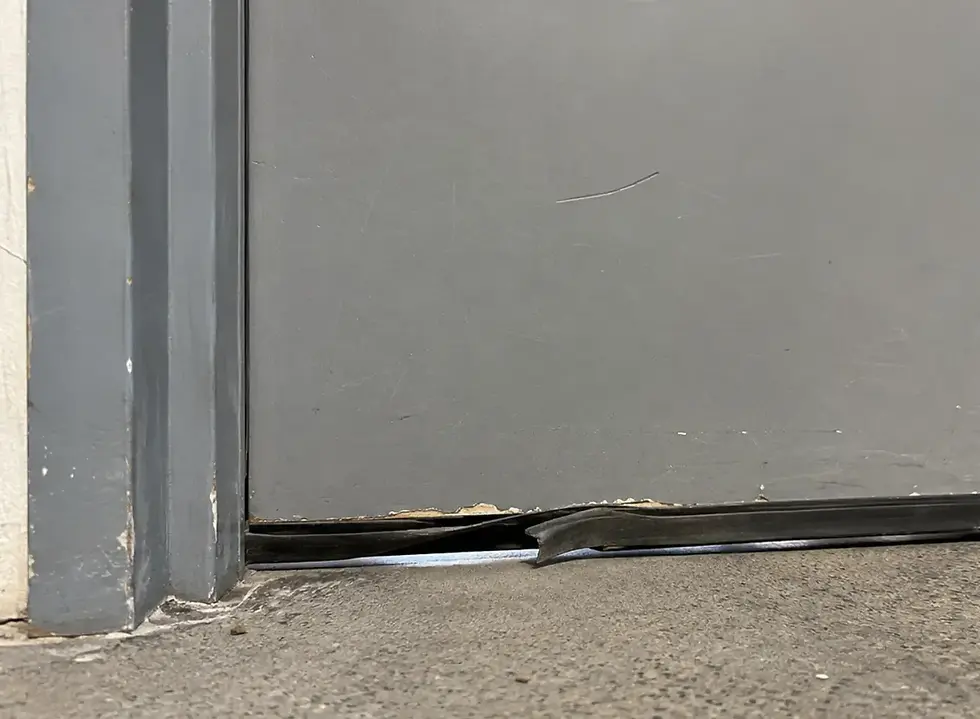
3. Missing, damaged or incorrectly replaced seals
Door seals are particularly vulnerable during painting and general maintenance.
A section may come loose when a door is cleaned. Paint can cover an existing seal. A damaged strip may be replaced with another product that looks similar but was never approved for that doorset.
Intumescent seals are designed to expand when exposed to heat. Smoke seals restrict smoke movement. Depending on the approved assembly, a fire door may incorporate one or both types, or a different tested arrangement.
That is why replacing a seal with a visually similar product isn't necessarily an acceptable repair.
Building managers can identify obvious damage, such as loose strips, missing sections or seals that have been cut around hardware.
The replacement specification, however, should be established by a competent contractor using the appropriate doorset information.
4. Changes to locks, closers and other hardware
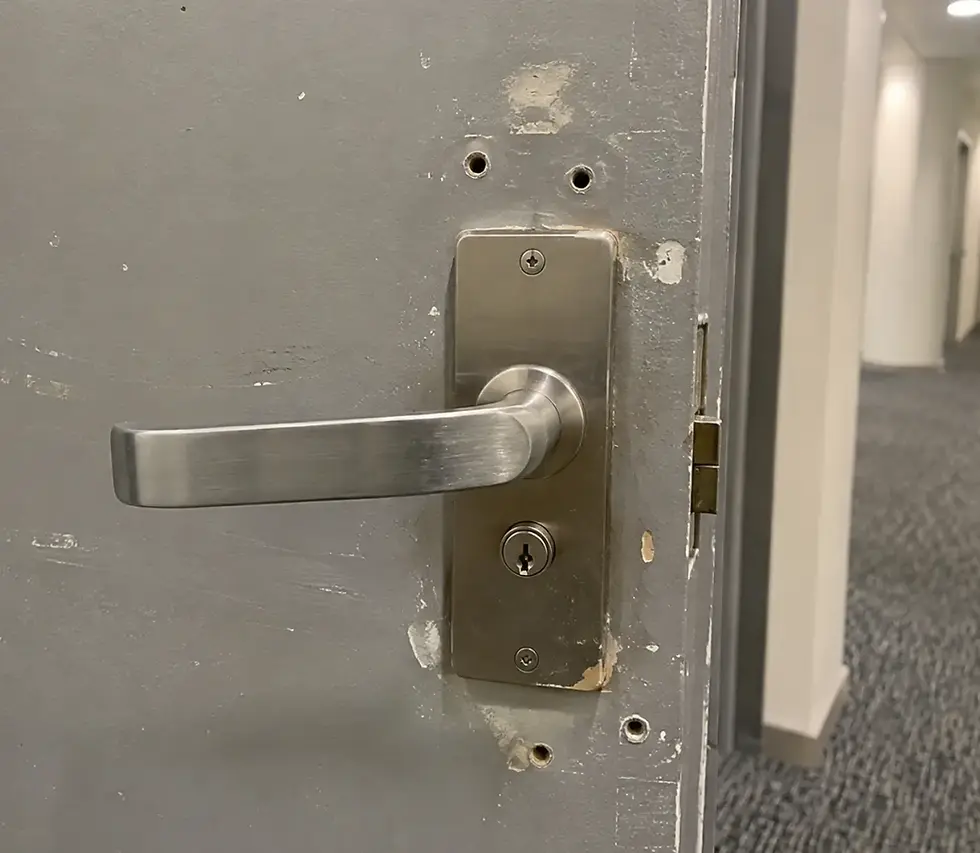
A lock replacement can be treated as a routine security job. On a fire-rated door, the choice of replacement hardware needs additional consideration.
The same applies when installing electronic access control, replacing a closer, adding security fittings or altering the door leaf to accommodate new equipment.
Fire-rated doorsets are assessed as assemblies. Their approved construction and compatible components determine how they are expected to perform.
A new lock may operate correctly during everyday use while still being unsuitable for the particular fire door.
Before approving modifications, establish:
Which doorset is installed and its required fire rating.
Whether the proposed hardware is suitable for that assembly.
Whether installation requires cutting, drilling or other modifications.
What documentation will be provided after the work.
If a lock or closer has already been replaced and there is no record of the product or installation, ask for the relevant information before commissioning further alterations.
Where documentation cannot be recovered, a competent fire door specialist should determine the appropriate next steps.
5. Fire doors held open with wedges or other objects
A stairwell door may be mechanically sound but unable to perform its intended function because somebody has stopped it from closing.
Common examples include wedges under doors, hooks holding leaves open and bins or cleaning equipment left in the closing path.
These issues sometimes return immediately after the obstruction is removed.
If a door is repeatedly wedged open, find out why. Staff may need to move equipment through it several times a day. Residents may find it difficult to open. A faulty closer may cause the door to slam.
The solution depends on the situation.
Where a hold-open arrangement is appropriate, it must be designed and installed to meet the relevant fire safety requirements. Ordinary doorstops and improvised restraints are not suitable substitutes.
The building manager should arrange removal of the obstruction and address the reason it keeps reappearing.
What to do when a fire door defect is reported
Finding a potential defect during a walk-through is useful, but the follow-up determines whether the problem is resolved.
A practical defect record should identify the door, describe the issue and show what action has been taken.
At minimum, capture the following information:
Record | What to include |
Door identification | Building, floor, location and asset number where available |
Observed problem | Specific behaviour or visible condition, rather than a guessed diagnosis |
Supporting evidence | Dated photographs and relevant inspection findings |
Recent work | Lock changes, flooring, painting, access-control or refurbishment work |
Follow-up | Contractor assessment, required rectification and verification of completed work |
Where the problem may affect an exit route or the door's required operation, escalate it promptly for assessment and appropriate risk management.
The urgency and defect classification should be determined by a competent person using the relevant requirements. Not every recorded non-conformance has the same safety implications.
EverSure's fire safety testing and inspection service includes documented inspection findings and reporting of maintenance and repair requirements.
Check the result before closing the work order
Suppose a door has been reported for failing to latch. The contractor attends, adjusts the closer and completes the job. The invoice is approved.
At that point, the building manager still needs confirmation that the original problem has been corrected.
The close-out record should establish what work was performed and that the required operation was verified.
Where a defect returns repeatedly, review the repair history. Another adjustment may be appropriate, but recurring faults can also indicate an underlying issue with alignment, worn components or the doorset itself.
Repair or replacement: what needs to be established first?
A defective fire door does not automatically require replacement.
A suitable closer adjustment, latch repair or approved seal replacement may restore the required operation, depending on the fault and doorset.
Other cases are less straightforward.
Significant damage to a door leaf, incompatible modifications, serious frame problems or missing information about the approved assembly may require further investigation.
A quotation based only on a photograph may not provide enough information to determine the correct repair or replacement.
Before authorising substantial work, the building manager should ensure the contractor has considered the existing door assembly, its required performance and the available certification or manufacturer information.
Where a replacement is necessary, the new doorset must be suitable for the opening and comply with the applicable requirements.
This is particularly important when replacing apartment entrance doors, where security, access and fire safety requirements need to be considered together.
Fire door inspections and NSW compliance requirements
NSW introduced mandatory AS 1851-2012 routine servicing requirements from 13 February 2026.
Under the current arrangements, owners of new and existing Class 1b and Class 2–9 buildings must ensure applicable essential fire safety measures are inspected and tested in accordance with AS 1851-2012, unless a relevant performance solution specifies another standard.
These obligations apply to relevant measures identified in a building's Fire Safety Schedule.
The NSW Government's guidance for building owners confirms that required maintenance records must be retained for at least seven years and made available for inspection.
AS 1851-2012 also requires an on-site hard-copy logbook. Electronic inspection records can supplement that documentation but do not currently replace the physical logbook requirement.
The regulation does not require every non-critical defect or non-conformance to be rectified immediately. The classification, potential safety consequences and appropriate rectification arrangements need to be considered.
An Annual Fire Safety Statement (AFSS) involves a separate assessment of applicable essential fire safety measures against their required performance standards.
Our guide to AFSS compliance in NSW explains how routine servicing, inspection records and annual assessments fit into the compliance process.
Fire door inspections and repairs in Sydney
Fire doors are subject to everyday wear, changes to surrounding building finishes and alterations made during maintenance work.
When problems are recorded clearly and assessed against the correct doorset requirements, building managers are in a better position to commission suitable repairs and confirm that outstanding defects have been resolved.
EverSure Fire Protection provides fire door inspection, maintenance, repair and installation services for strata, commercial and industrial properties across Greater Sydney.
If your building has outstanding fire door defects, recurring maintenance problems or doors that require specialist assessment, contact us to discuss the work required.
This article provides general information for NSW building owners and managers. Specific fire door requirements depend on the building, its Fire Safety Schedule, applicable standards and approved doorset specifications.


Comments